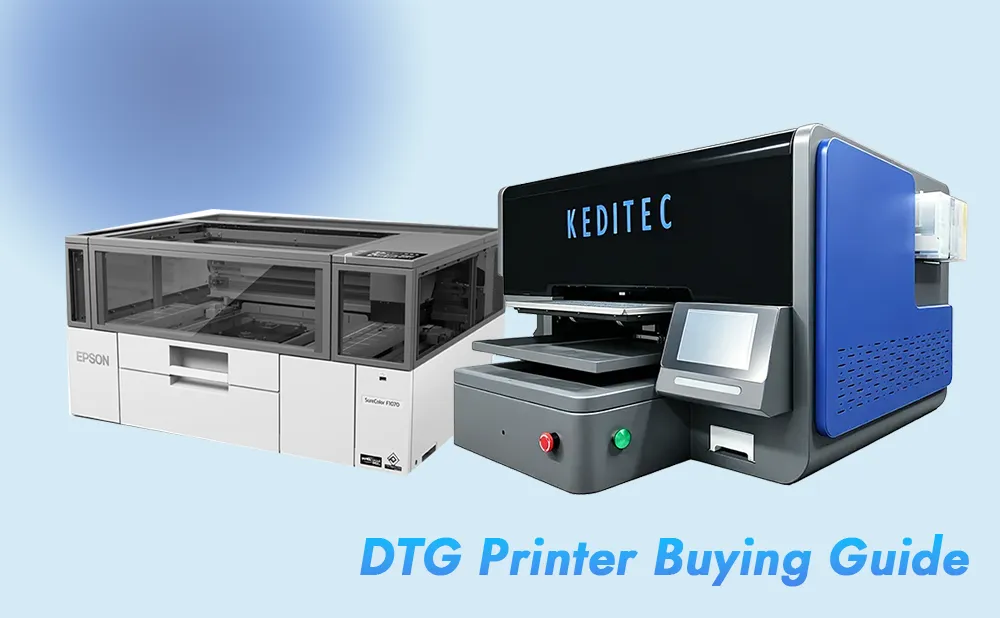
Introduction
Are you considering starting a custom apparel business or expanding your print shop? A direct-to-garment (DTG) printer could be your most valuable investment. Unlike traditional screen printing, DTG technology allows you to print high-quality, full-colour designs directly onto fabric with minimal setup.
However, choosing the right DTG printer can be overwhelming given the number of models and features available in 2025-2026. This comprehensive guide will help you make an informed decision by covering everything from key specifications to budget considerations.
What is DTG Printing?
Direct-to-garment printing is a digital printing technology that sprays water-based ink directly onto textiles. This method offers several advantages over traditional screen printing:
- Higher precision and colour reproduction
- No screens or stencils required
- Ideal for small batches and on-demand production
- Environmentally friendly with water-based inks
DTG printers are suitable for printing on t-shirts, hoodies, canvas bags, and even denim.
Key Features to Consider When Buying a DTG Printer
1. Print Resolution
The resolution of a DTG printer determines the quality of your prints. Look for printers offering at least 1200 dpi × 1200 dpi for sharp, detailed output. Higher resolutions ensure vibrant colours and lifelike designs.
What to look for:
- Print head quality and nozzle count
- PrecisionCore or similar high-quality printheads
- At least 3,200 nozzils for wider coverage
2. Print Speed
For small businesses, a good target speed is 10-20 seconds per shirt. Faster print speeds allow you to produce more garments in less time, increasing profitability.
Note: Some professional models achieve even faster production times with automated maintenance stations.
3. Print Area Size
The standard print area for DTG printers is 14×16 inches, but some support larger designs up to 16×20 inches. Consider your typical garment sizes when selecting a printer.
4. Ink System and Colour Quality
Ink quality significantly affects:
- Colour accuracy and vibrancy
- Wash durability and fade resistance
- Ink flow and printhead health
- White ink layering on dark garments
Look for printers compatible with high-performance, eco-friendly DTG inks.
5. Pre-treatment Requirements
Some DTG printers feature built-in pre-treatment systems, eliminating the need for manual application. This can streamline your workflow and ensure consistent results.
DTG Printer Price Ranges (2025-2026)
| Tier | Price Range | Best For |
| Entry-Level | 7,000 | Beginners, home use, low volume |
| Mid-Range | 15,000 | Growing businesses, medium volume |
| Professional | 30,000+ | Established shops, high volume |
Hidden costs to consider:
- Ink costs
- Maintenance supplies
- Software licensing
- Garment pre-treatment materials
Top DTG Printer Recommendations for Small Businesses
1. Epson SureColor F1070
- Price: Approximately $7,495
- Best for: Startups and growing print shops
- Features: High-quality prints, precise details, reliable speed
2. Epson SureColor F2270
- Price: Mid-range professional tier
- Best for: Comprehensive small business needs
- Features: Enhanced design, faster turnaround times
3. Brother GTX Pro
- Resolution: 1200 dpi × 1200 dpi
- Print area: Up to 16″ × 21″
- Features: Dual white ink circulation, industrial maintenance station, 1-year warranty
4. Roland VersaSTUDIO BT-12
- Best for: Entry-level users
- Price: Budget-friendly option for beginners
5. keditec DTG Printers g1
- Features: High resolution, low maintenance, efficient production
- Best for: Entrepreneurs starting their custom apparel business
Additional Buying Considerations
Maintenance and Support
- Choose brands with reliable customer support
- Look for automated maintenance systems to reduce downtime
- Consider warranty terms (1-year minimum is standard)
Software Compatibility
Ensure the printer is compatible with your design software:
- Adobe Photoshop CS6/CC
- Adobe Illustrator CS6/CC
- CorelDRAW 2018/2019
Fabric Compatibility
DTG printers work best on:
- Cotton and cotton blends
- Light and dark garments
- Various textile materials including hoodies and bags
Budget-Friendly Alternatives
If a dedicated DTG printer is beyond your budget, consider:
- Converted/repurposed inkjet printers suitable for DTG inks
- DTF (Direct-to-Film) printers as an alternative for certain applications
Final Checklist Before Purchase
- Define your print volume and daily production goals
- Determine your maximum budget including hidden costs
- Test the printer if possible
- Calculate potential ROI based on hourly production
- Verify compatibility with your existing workflow
- Research local support and service availability
Conclusion
Investing in a DTG printer is a significant decision for any small business. By understanding the key features, price ranges, and your specific needs, you can choose a printer that delivers quality results and grows with your business.
Remember that profitability depends on production speed, pricing, and operational efficiency. For example, producing 16 shirts per hour could generate approximately £272 per hour in profit, with monthly income potentially reaching £32,000 depending on your operation.
For the best results, we recommend physically testing the equipment and consulting with industry professionals to confirm the optimal choice for your investment.
Frequently Asked Questions
Q: How long does a DTG printer last?
A: With proper maintenance and regular servicing, DTG printers can operate reliably for 3-5 years or longer.
Q: Can DTG printers print on dark garments?
A: Yes, modern DTG printers use white ink layering to print effectively on dark fabrics.
Q: Is DTG printing more expensive than screen printing?
A: For small batches, DTG is often more cost-effective due to no setup costs. For large volumes, screen printing may be more economical.
Q: What ink type should I use?
A: Choose high-quality, eco-friendly DTG inks compatible with your printer model.