Introduction
If you’re asking “Is DTF printing expensive?” you’re probably not looking for a one-word answer. You want to know: Can I make money with this?
The short answer is no—DTF printing is not expensive, especially compared to screen printing for small runs. But the real answer depends entirely on how you calculate your costs.
Here’s the thing: a 10″×10″ DTF transfer can cost you anywhere from $0.84 to $3.50+ in consumables alone, depending on how you print. That’s a wide range. The difference comes down to one thing: knowing exactly what goes into each transfer and optimizing every step.
In this guide, I’ll walk you through every cost component, give you a working calculator template, and show you exactly how to price your DTF prints for profit in 2026.
What Actually Goes Into DTF Printing Costs?
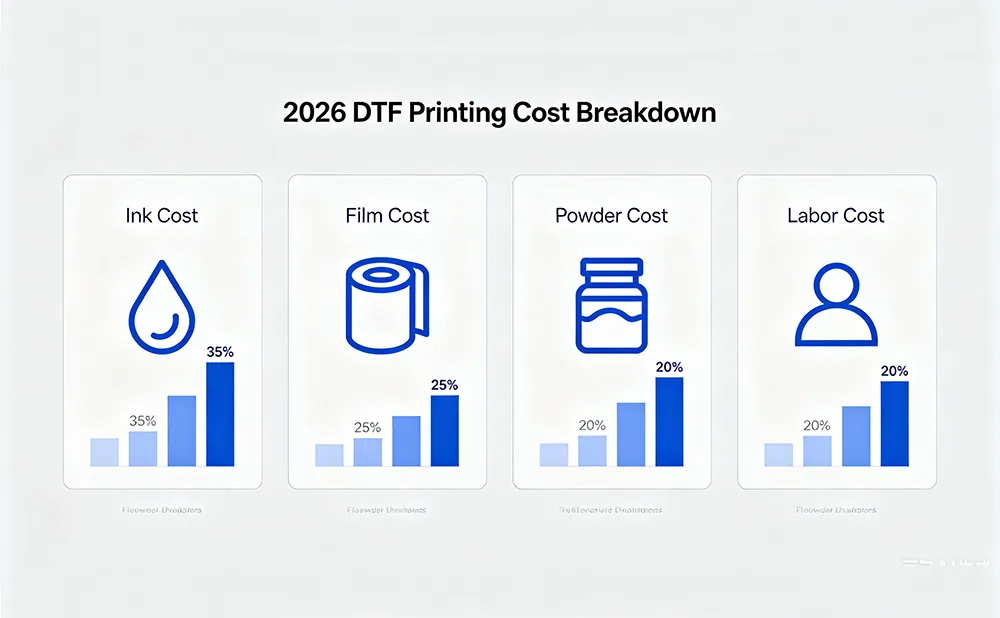
Before we get to numbers, let’s break down what you’re actually paying for. There are four core consumables and three hidden cost buckets that most beginners overlook.
The Four Core Consumables (3-Column Table)
| Consumable | 2026 Market Price | Yield & Key Notes |
| DTF Ink (CMYK + White) | $50–$70 per liter | 70–90 m² per liter; white ink consumes more |
| Transfer Film (PET roll) | $120–$150 per roll (60cm×100m) | Billed by meter; stores the printed design |
| Hot Melt Powder | $15–$25 per kg | Covers 100–150 linear meters; bonds ink to fabric |
| Maintenance Parts (printhead, caps, wipers) | $30–$100+ per month | Fixed monthly cost; skip this and risk $300+ printhead failure |
The Three Hidden Costs
- Electricity – Your printer runs, but the curing oven (for melting powder) is the real power hog. At $0.15/kWh, running a 2000W setup for an hour costs about $0.30.
- Labor – This is the most overlooked cost. Design time, machine operation, heat pressing, and maintenance all add up. At $20/hour, if you produce 40 shirts per hour, that’s **$0.50 per shirt** in labor alone.
- Waste & Spoilage – Expect 5–10% waste from printhead clogs, film jams, or powder inconsistencies. Budget for it upfront.
Real-World Cost Examples: What You’ll Actually Pay
Let’s look at two real scenarios based on 2026 pricing.
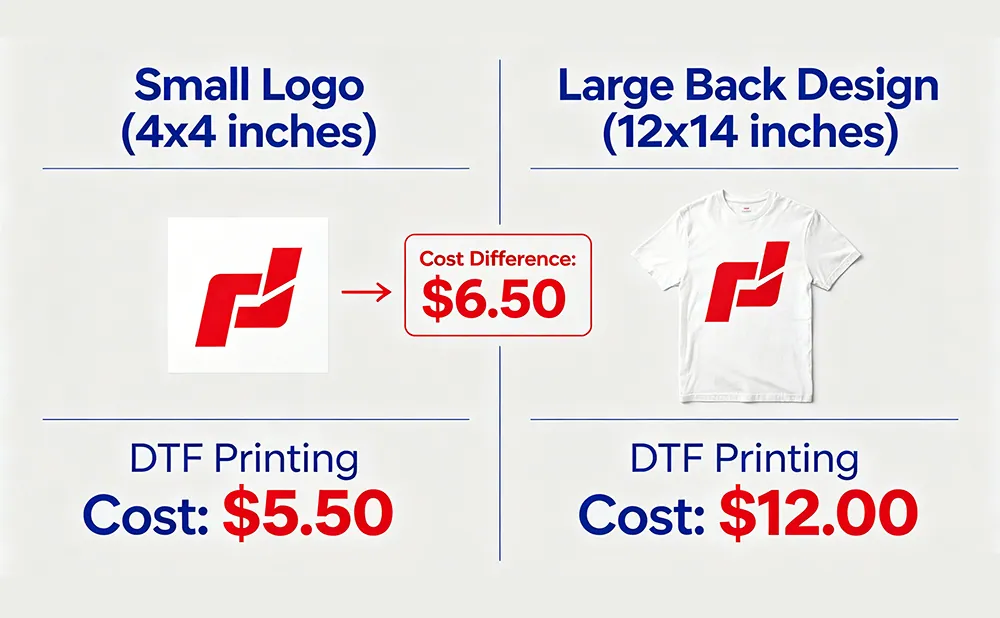
Scenario A: Small Logo (4″×4″)
| Cost Item | Amount |
| Consumables (ink + film + powder) | $0.13 |
| Electricity | $0.005 |
| Labor | $0.40 |
| Total Per Shirt | ~$0.54 |
Scenario B: Large Back Design (12″×14″)
| Cost Item | Amount |
| Consumables (ink + film + powder) | $1.39 |
| Electricity | $0.03 |
| Labor | $0.65 |
| Total Per Shirt | ~$2.07 |
The takeaway? Design size matters. A full-back print costs roughly 4× more in consumables than a small chest logo. Labor also scales—larger transfers take more time to align and press.
The DTF Cost Calculator: Template You Can Use Today
Here’s a simple formula you can plug your own numbers into:
text
Total Cost Per Transfer =
(Ink Cost per m² × Design Area m²)
+ (Film Cost per m² × Design Area m²)
+ (Powder Cost per m² × Design Area m²)
+ (Electricity Cost per Hour ÷ Output Per Hour)
+ (Labor Rate per Hour ÷ Output Per Hour)
+ 8% Waste Buffer
+ Software Subscription ÷ Monthly Output
Worked Example
Let’s say you’re printing 100 shirts with a 10″×10″ design:
- Consumables: $0.84 per transfer
- Electricity: $0.02 per transfer
- Labor: $0.50 per transfer (at $20/hr, 40 shirts/hr)
- Waste buffer (8%): $0.11
- Software (RIP): $0.05 per transfer (assuming $50/month for 1,000 transfers)
Final Cost: ~$1.52 per shirt
DTF vs. Screen Printing: Which Is Cheaper?
This is the question everyone really wants answered. Here’s a 3-column side-by-side comparison.
| Factor | DTF Printing | Screen Printing |
| Setup Cost | None—print on demand | $50–$200+ per color screen |
| Minimum Order | 1 piece | Usually 12–24+ pieces |
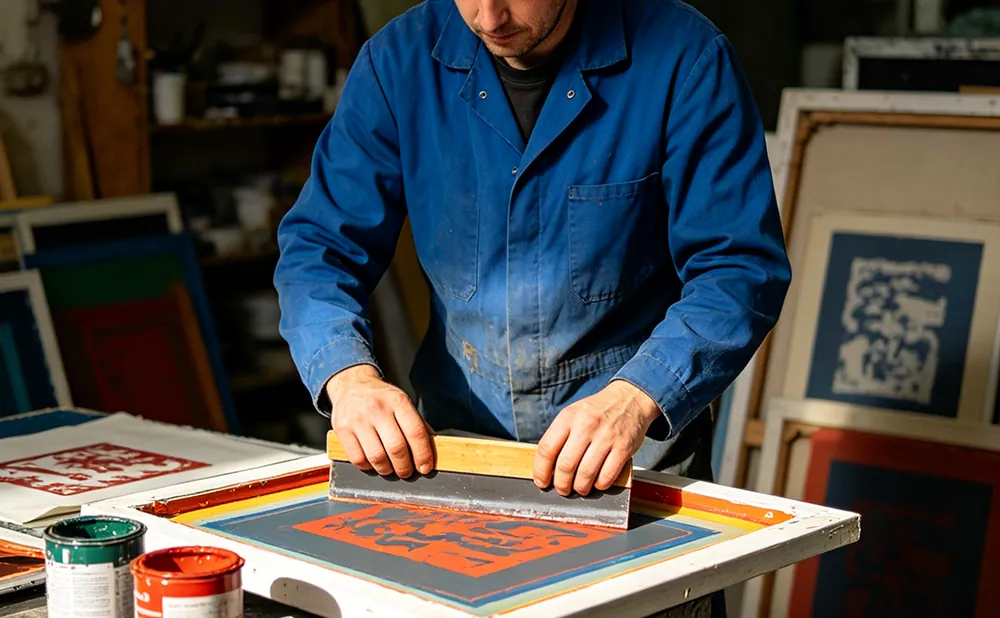
| Per-Unit Cost (small runs) | $1–$3 | $5–$10+ (due to setup fees) |
| Per-Unit Cost (large runs) | $1–$3 | $0.50–$2 |
| Color Complexity | Unlimited colors, gradients | Each color adds cost |
| Fabric Compatibility | Cotton, poly, blends, dark/light | Varies by ink type |
The verdict: If you’re doing under 500 pieces per design, DTF is almost always cheaper. If you’re running 5,000+ pieces of the same design, screen printing eventually wins on per-unit cost—but you’re locked into that one design.
How to Lower Your DTF Printing Costs in 2026
1. Use Gang Sheets (Non-Negotiable)
In 2026, gang sheets aren’t optional—they’re your most powerful cost-saving tool. By packing multiple designs onto one sheet of film, you dramatically reduce film and powder waste per transfer. A single A4 gang sheet with mixed designs might cost $1.50 in consumables and sell for $5–$8 wholesale.
2. Buy Consumables in Bulk
Ink, film, and powder all get significantly cheaper at volume. Look for wholesale suppliers on Alibaba or specialized DTF distributors. A 10–20% discount on consumables directly drops your per-transfer cost.
3. Maintain Your Printhead Religiously
A replacement printhead costs **$300+**. Daily cleaning adds a few cents in ink but can extend printhead life by months. Skip maintenance, and that $300 hits your P&L overnight.
4. Optimize Your Workflow
- Batch similar designs together
- Pre-heat your oven so it’s ready when you are
- Train staff on efficient pressing techniques
- Track your output per hour and look for bottlenecks
Frequently Asked Questions
Is DTF printing profitable for a small business?
Yes. With no minimum orders and no setup fees, DTF is ideal for small-batch customization. Many home-based businesses start with an entry-level DTF printer around $2,000 and scale up.
How much does a DTF printer cost in 2026?
Entry-level printers start around $1,000–$2,000. Full production setups (printer + shaker + oven) range from $8,500 to $19,000.
What’s the cheapest way to start DTF printing?
Start with a basic printer and outsource your transfers to a DTF supplier while you build volume. Once you’re doing 500+ transfers per month, bringing production in-house makes financial sense.
How do I price DTF transfers for resale?
A common wholesale markup is 3–5× consumable cost. If your consumables are $1.50, wholesale at $5–$8. Retail pricing can go higher depending on your market and design complexity.
Does DTF work on dark fabrics?
Yes—that’s one of DTF’s biggest advantages. The white ink layer provides full opacity, so designs pop on black and other dark colors.
Final Thoughts: Is DTF Printing Expensive?
No—DTF printing is one of the most cost-effective decoration methods available in 2026, especially if you’re doing small runs, custom orders, or multi-color designs.
The key is understanding your costs down to the penny. Use the calculator above, track your consumables religiously, and optimize with gang sheets and bulk purchasing. Do that, and DTF won’t just be affordable—it’ll be profitable.
About the author: This guide draws on real-world DTF production data and 2026 industry pricing from major consumable suppliers. All figures are based on market averages as of 2026 and should be adjusted for your local pricing and exchange rates.